Static vs Dynamic QR Codes: What's the Difference?

In short: Static QR codes encode data directly into their pattern and can't be changed after creation. Dynamic QR codes encode a short redirect URL, letting you update the destination anytime without reprinting. That's the core difference, and it affects everything from flexibility to cost.
Let's break down how each type works and when to use them.
At a glance
Here's a quick comparison of the key differences between static and dynamic QR codes:
| Feature | Static | Dynamic |
|---|---|---|
| Editable after printing | ❌ | ✅ |
| Scan analytics | ❌ | ✅ |
| Works offline | ✅ (non-URL types) | ❌ |
| Code density | Grows with data length | Always compact |
| Ongoing cost | Free | Subscription |
| Server dependency | None | Redirect server required |
Next, let's dive into how each type works under the hood and how that impacts your use case.
How static QR codes work
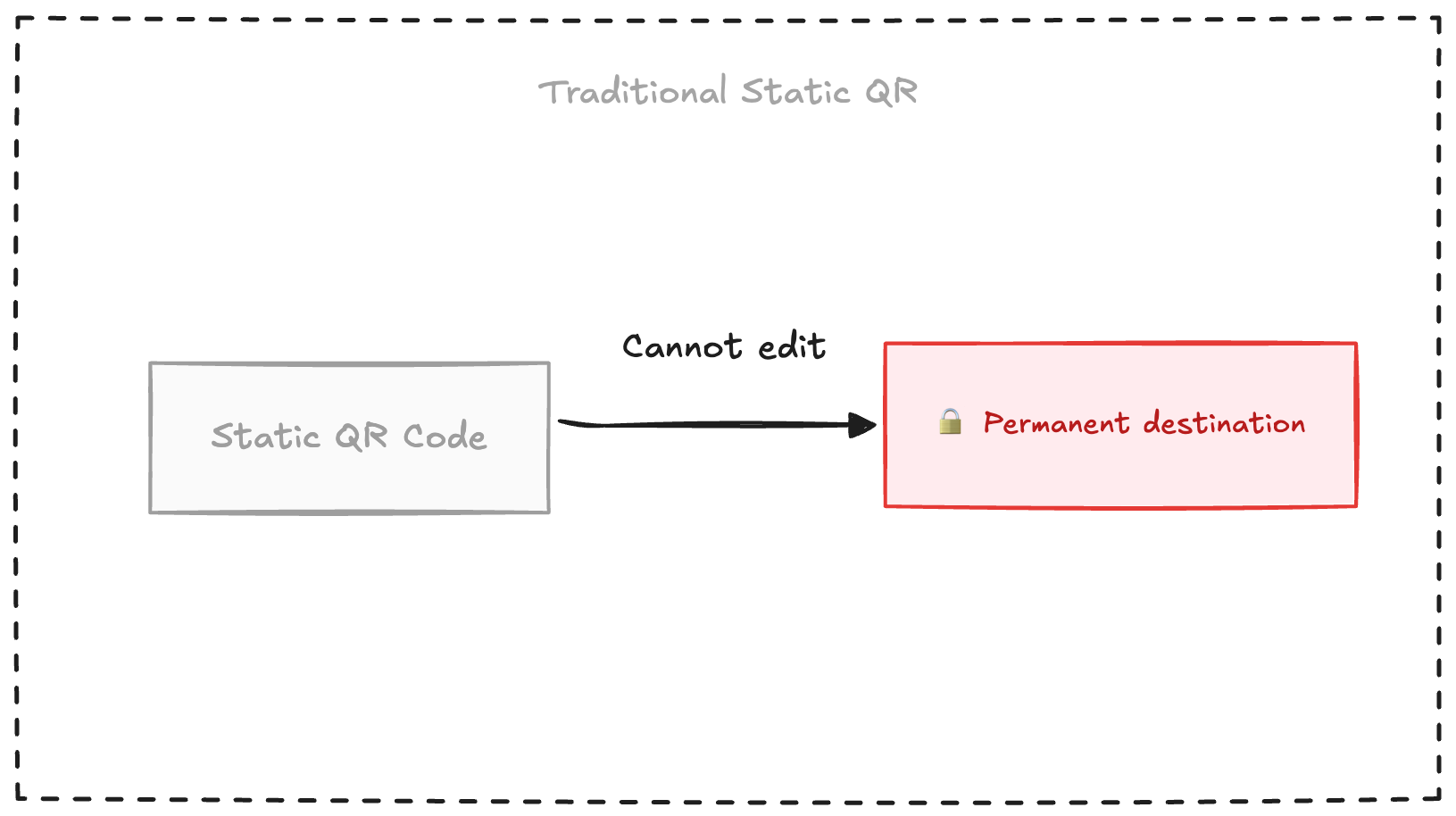
A static QR code encodes your data directly into its pattern of black and white modules. When someone scans it, their phone reads the data straight from the code itself, no server involved.
The content is permanent. Once you generate a static code for a URL, a block of text, Wi-Fi credentials, or a vCard, that data is locked in. You can't change it without generating a new code (and updating any printed materials).
There's a practical tradeoff: more data means more modules, which makes the code denser and harder to scan. A QR code encoding a long URL will be noticeably more complex than one encoding a short one.
How dynamic QR codes work
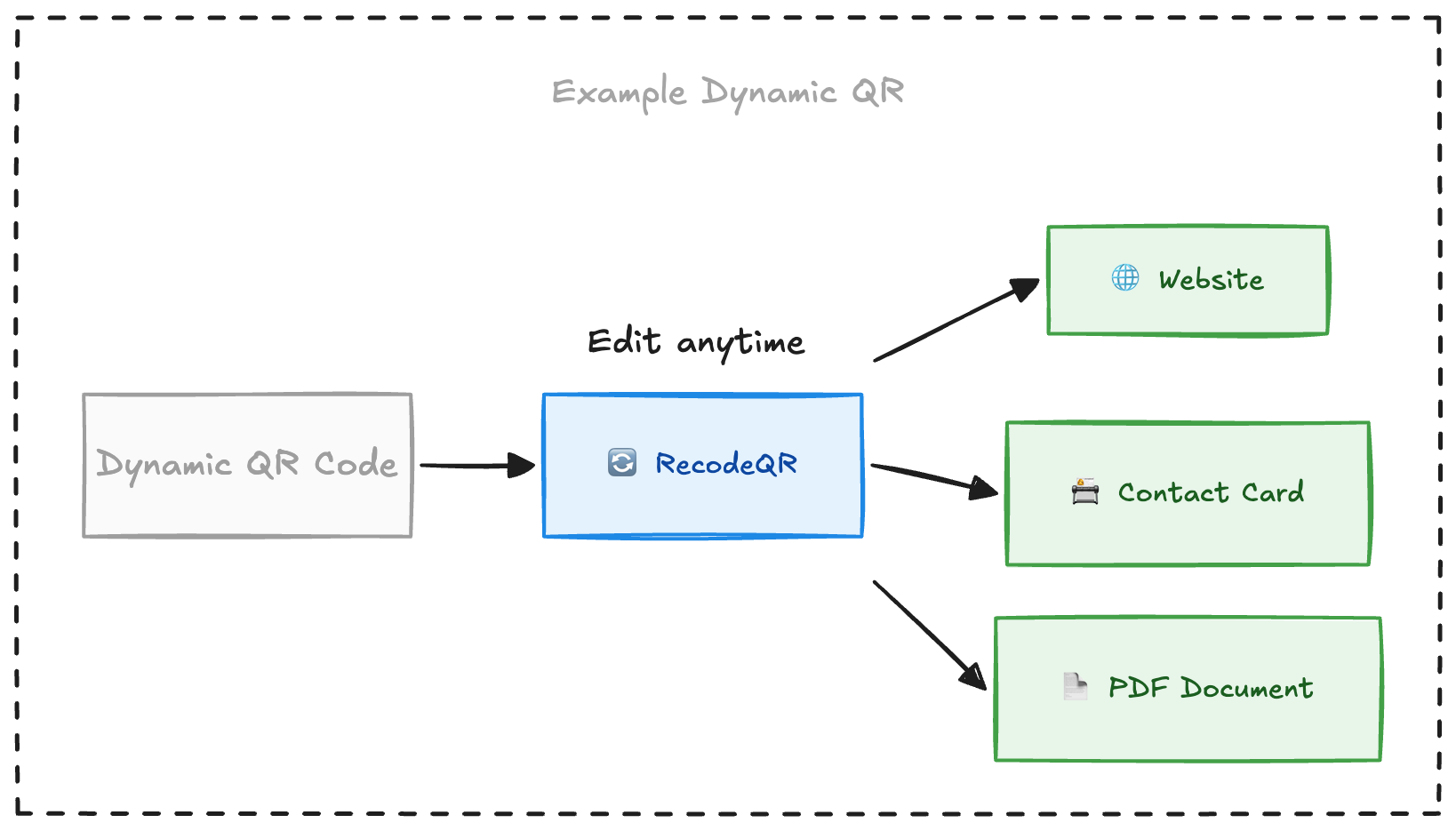
A dynamic QR code takes a different approach. Instead of encoding your actual destination, it encodes a short redirect URL. When someone scans the code, they hit a redirect server that forwards them to the real destination.
This indirection is what gives dynamic codes their flexibility. You can change the destination at any time without touching the printed code. The code on your flyer, packaging, or billboard stays the same. Only the redirect target changes.
Because the encoded URL is always short, the code stays compact and easy to scan regardless of how long or complex the actual destination URL is. The redirect server also logs each scan, giving you analytics like scan count, location, device type, and time.
When to use static QR codes
Static codes are the right choice when the content is truly permanent and simplicity matters:
- Wi-Fi passwords - works offline and rarely changes
- Personal contact cards - a vCard for your own details
- Internal signage - permanent URLs that won't need updating
- Zero dependencies - when you don't want to rely on any external service
If you're encoding something that will never change and you don't need analytics, static is simple and free.
When to use dynamic QR codes
Dynamic codes earn their keep when flexibility or tracking matters:
- vCard QR codes - create and manage digital business cards for your whole team, and update contact details without reprinting
- Campaign tracking - know when, where, and how often someone scans your code with scan analytics
- Printed materials at scale - use bulk generation for packaging, signage, and marketing materials where a reprint costs far more than a subscription
- Real estate signs - swap listing details when a property sells without replacing yard signs
- Custom domains - use your own branded short domain for QR code links that build trust and recognition
Any time you're putting a QR code on something physical and permanent, the ability to change the destination later is valuable insurance.
How much do dynamic QR codes cost
Static QR codes are free to create with any QR code generator. Dynamic QR codes require a paid plan because they rely on server infrastructure to redirect scans, collect analytics, power custom domains and more.
RecodeQR's most affordable plan starts at $9/mo (billed annually) for 15 dynamic codes, unlimited scans and analytics included.
Here's a rule of thumb: if the cost of reprinting your materials exceeds the subscription cost, dynamic QR codes are likely worth it. For low budget projects or one-off uses, static codes may be sufficient.
Conclusion
Static QR codes are simple and permanent: the data lives in the code itself. Dynamic QR codes are flexible and trackable: they route through a server you control
Neither type is universally better. The right choice depends on whether you need the ability to update your codes after they're printed and whether scan analytics matter for your use case.
Ready to create your QR code?
RecodeQR is the easiest way to create QR codes you can track and edit anytime.
Free 3-day trial. No credit card required.